Living in Western Australia, we are all too familiar with the sensation of opening a car door or walking into an office and being hit by a wall of heat. For residents in Cockburn, Perth, and the surrounding suburbs, managing the intense sun is a daily necessity, not a luxury. When looking for a solution, most people naturally gravitate towards the darkest film available, operating under the assumption that “darker equals cooler.”
However, this is one of the most common misconceptions in the industry. Darkness provides privacy, but it does not guarantee heat reduction. This is where solar tinting comes into play. Unlike standard dyed films that simply shade the glass, high-performance solar films are engineered to target the invisible spectrum of light—specifically Infrared (IR) and Ultraviolet (UV) rays—to reject heat at the source. Understanding the difference between these technologies is the key to making a smart investment for your vehicle, home, or business.
Defining Solar Tinting: It Is Not Just About Shade
To understand how window film works, we first need to look at the solar spectrum. Sunlight is composed of three main parts:
- Visible Light: What we can see (and what creates glare).
- Infrared (IR) Rays: What we feel as heat (comprising about 53% of solar energy).
- Ultraviolet (UV) Rays: Invisible radiation that causes skin damage and fades interiors.
Standard “privacy film” or “limo tint” primarily addresses the first category—Visible Light. It darkens the glass to stop prying eyes looking in, much like a pair of sunglasses. While this offers some shade, if the film lacks heat-rejecting technology, the glass will still absorb the heat and radiate it into the cabin or room.
Solar tinting, on the other hand, is designed with a specific focus on Total Solar Energy Rejected (TSER). High-quality solar films can be surprisingly light in appearance while blocking significant amounts of heat. This technology allows Perth drivers and homeowners to maintain clear visibility and natural light without suffering the “oven effect” typical of our summer months.
The Evolution of Film Technology
The reason for the confusion between darkness and performance lies in the history of the product. Window film has evolved significantly over the last few decades, moving from simple dyes to complex nanotechnology.
1. Standard Dyed Film (The Old School)
This is the entry-level option often found in budget packages. It consists of a layer of polyester dyed to a specific colour (usually charcoal or black).
- Pros: It provides privacy and reduces glare.
- Cons: It offers minimal heat rejection. Over time, the sun bleaches the dye, leading to the infamous “purple” windows you see on older cars.
2. Metallised Film
To improve heat rejection, manufacturers started embedding microscopic metal particles into the film. These particles reflect heat away from the glass.
- Pros: Excellent heat rejection and durability.
- Cons: The metal content can interfere with GPS, mobile phone signals, and keyless entry systems. It also has a shiny, mirror-like appearance that not everyone appreciates.
3. Nano-Ceramic Film (The Modern Standard)
This is the pinnacle of solar tinting. By using non-conductive ceramic particles at a molecular level, these films target Infrared heat specifically.
- Pros: Superior heat rejection without the need for dark shades. It does not block electronic signals and is highly resistant to fading.
- Cons: It represents a higher initial investment, though the long-term value is unmatched.
Solar Tinting vs. Standard Privacy Film: The Breakdown
When you visit a workshop or search online, it can be difficult to distinguish between products just by looking at them. Here is how they compare in performance:
Heat Rejection Capabilities
Standard privacy film relies on “absorption.” It absorbs the solar energy, making the glass hot. Eventually, that heat transfers inside. Solar tinting utilises “reflection” and “spectral selectivity” to bounce the heat away before it penetrates the glass. A high-quality ceramic tint Perth residents install can block up to 90% of Infrared heat, even in lighter shades.
UV Protection
While even cheap films block some UV, premium solar films block 99.9% of harmful UV rays. This is critical in WA, where the UV index frequently reaches extreme levels. This protection acts as a sunscreen for your car’s interior (preventing leather from cracking and dashboards from fading) and, more importantly, for your skin while driving.
Visibility and Safety
One of the dangers of using ultra-dark standard film to combat heat is reduced visibility, particularly at night. Because solar tinting does not rely on darkness to block heat, you can opt for a legal, lighter shade that provides excellent night-time clarity while still keeping the car drastically cooler than a dark, dyed alternative.
Why “Darker” Does Not Always Mean “Cooler”
This is the “salesy fluff” trap many consumers fall into. You might see a car with “limo tint” (5% VLT) and assume it is cool inside. If that tint is a cheap dyed film, the passengers are likely still sweating because the Infrared heat is passing right through the dark dye.
Conversely, a vehicle fitted with a high-end clear or light blue ceramic film might look like it has no tint at all, yet the interior remains comfortable.
For Perth and Cockburn vehicle owners, this distinction is vital due to strict Department of Transport regulations.
- Legal Limits: In WA, front side windows on passenger cars must allow at least 35% of light through (35% VLT).
- The Dilemma: If you rely on old technology, a 35% tint won’t block much heat.
- The Solution: By choosing a solar tinting product at the 35% legal limit, you stay roadworthy and safe while achieving heat rejection figures that outperform illegal dark tints of the past.
How to Choose the Right Solar Tint Near Me
When you are ready to upgrade your vehicle or property, searching for solar tint near me will yield dozens of results. Filtering the quality providers from the budget operators requires asking the right questions.
1. Ask About the Film Type
Do not just ask “how much for a tint?” Ask “what type of film do you use?” If the provider cannot explain the difference between Carbon and Ceramic, or if they rely on generic dyed films, you are likely paying for privacy, not performance. At Solartint Cockburn, we are transparent about the specifications of our films, including TSER and IR rejection numbers.
2. Check the Warranty
Standard privacy films often come with limited warranties because the manufacturers know the dye will fade. Premium solar films, particularly ceramic ranges, usually carry a lifetime manufacturer’s warranty against peeling, bubbling, cracking, and colour change.
3. Consider Your Specific Needs
- For Parents: If you have infants in rear-facing capsules, you might want a film that combines both high privacy (to help them sleep) and high solar rejection (to keep them cool).
- For Business Owners: If you are tinting an office, you might want a film that rejects heat without making the building look closed or uninviting.
- For Night Drivers: If you struggle with night vision, a high-performance light ceramic film is the only safe option.
Beyond the Vehicle: Solar Tinting for Homes and Offices
While we often focus on cars, the principles of solar tinting apply equally to your home or commercial premises.
Modern architecture in suburbs like Cockburn Central favours large glass expanses. While beautiful, these windows create massive energy inefficiencies. Your air conditioning works overtime to combat the solar heat gain.
Applying a solar film to your home’s windows acts as an insulation barrier. It keeps the heat out in summer and can even help retain warmth in winter. Unlike heavy drapes or roller shutters which block your view and require artificial lighting, solar film allows you to enjoy your garden view while significantly reducing your energy bills and carbon footprint.
The Professional Application Difference
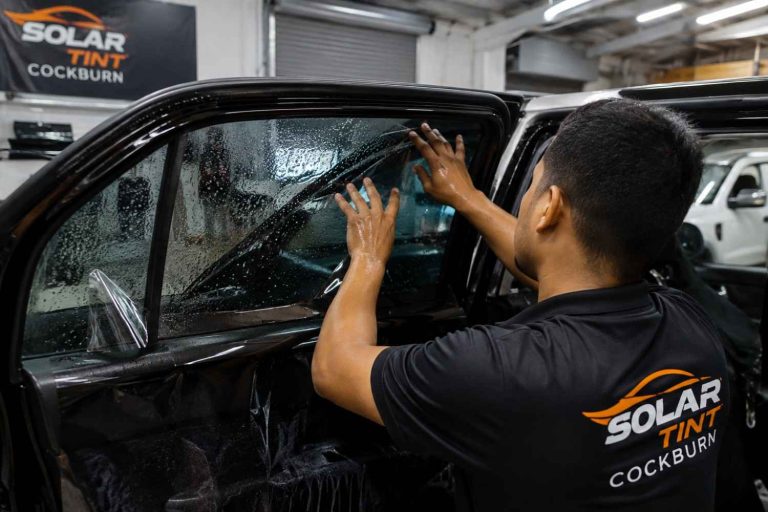
Even the best ceramic tint Perth has to offer will fail if installed incorrectly. Solar films are often thicker and more complex to shrink-mold than standard dyed films. They require:
- Precision Cutting: To ensure no light gaps at the edge of the window.
- Clean Application: Using filtered water and a dust-free environment to prevent contamination.
- Expert Handling: To prevent creasing or damaging the film’s nano-coating during installation.
At Solartint Cockburn, we combine top-tier materials with expert craftsmanship. We don’t just sell “tint”; we sell a climate control solution tailored to your vehicle or property.
Conclusion
The days of choosing window tint based solely on “how black it looks” are over. With the advancements in solar tinting, you can now prioritise performance, safety, and longevity over aesthetics alone.
For the residents of Perth, investing in a high-quality solar film is one of the smartest decisions you can make for your comfort and your wallet. It protects your vehicle’s interior from our harsh sun, reduces the load on your air conditioning, and ensures you arrive at your destination cool and collected.
Do not settle for a sticker that just darkens your view. Choose a technology that actively cools your life.
Ready to Feel the Difference?
Stop the heat before it enters your car. Upgrade to premium solar protection that delivers real results.
Contact Solartint Cockburn Today to discuss our range of High-Performance and Ceramic films. Get a free quote and discover the perfect balance of clarity and cool.